Francisco: The name "Frank" come from the Proto Germanic word "frankon" which means javelin or lance. While being the name of the tribe that conquered the Roman province of Gaul, and eventually the French state, it also became both a descriptive word (meaning "free" or "freely", hence to "speak frankly") and a first name, with many variants, such as St. Francis of Assisi.
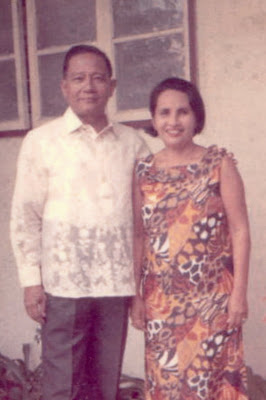
Coyotito's paternal Great-Grandfather was named Francisco, or "Frank", as he came to be called, although he was always known to his grandkids as "Grandpa Pancho".
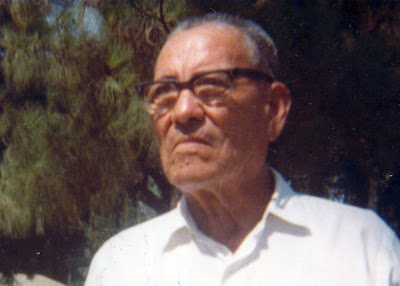
A tall, dignified man, Grandpa Pancho worked in orange groves his whole life, married and raised three kids. A man who spoke Yaqui and wore long sleeve shirts in the desert sun everyday, there was never a bigger fan of LA Dodger games, enjoyed with a warm beer. He always had a dollar in his wallet to give to Joel and his sisters and brother to go get a popsicle at the corner store.
Famous Franciscos:
Francisco Madero,
Francisco "Pancho" Villa.
Asuncion: In Spanish, literally it means "Assumption", related to the
Assumption of the Blessed Virgin Mary. The Assumption is Mary's rise into Heaven, and is related to the Ascension, Jesus' rise into Heaven. Catholics celebrate this day on August 15, one week before Coyotito's birthday.
Asuncion was Coyotito's maternal Great-Grandfather's last name in the Philippines, Artemio. A man who was married for 43 yeas and raised 10 kids, he fought in the US Army against the Japanese invasion of his homeland in World War II, escaping the Bataan Death March. He eventually was appointed State Prosecutor for the Philippines. All of his kids and grandkids called him "Papang."
Coyotzin:

Cotoztin is a Náhuatl name. Náhuatl is the most widespread indigenous language of the Americas, was spoken in central Mexico even before the Aztecs migrated there, and was the lingua franca (think Latin) throughout Mesoamerica in the centuries before the European invasion.
From a
Náhuatl glossary: "Coyotl" means coyote and "tzin" is a reverential name completion.
Inspirations for Coyotzin:
Joel's Grandfather, Grandpa Pancho, was
Yaqui (Yoeme). It was important to us that Francisco have a name that honored that indigenous tradition. One of the Yaqui's most auspicious rituals is the "Baile de Coyote".

One of Mexico's most revered native leaders was
Nezahualcoyotl, tlatoani (king) of the city-state of Texcoco and Náhuatl's most prolific classical
poet.
"The Pearl" by John Steinbeck. A bittersweet tale of injustice towards Mexico's indigenous communities and the dedication parents will go to provide for their baby. Though the parents made wrong decisions, their enduring and unconditional love for their child Coyotito was touching and inspiring.
A baby name in Náhuatl for Coyotzin is
Coyopil.
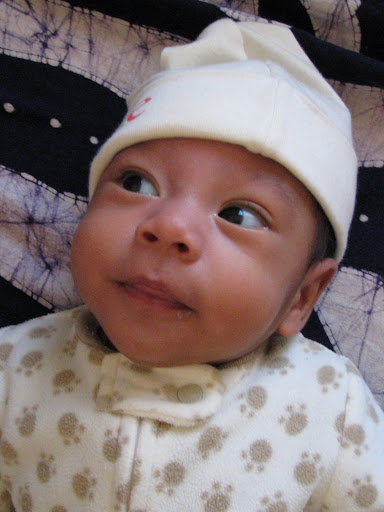
But he is just our little Coyotito...
Mi hermano el hombre
Netzahualcóyotl
Amo el canto de zenzontle
pájaro de cuatrocientas voces,
amo el color del jade
y el enervante perfume de las flores,
pero más amo a mi hermano: el
hombre.
Tena: An unusual (some would say distinctive!) Spanish surname, possibly derived from "Valle de Tena", a long valley located in northeastern Spain near the French border in the Pyrenees.
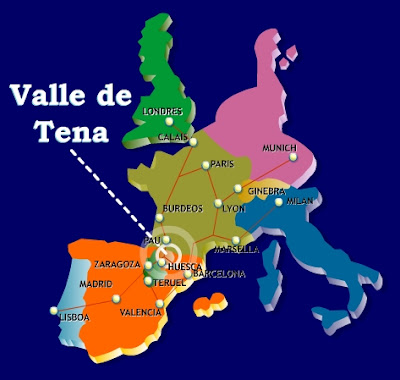
View Larger Map
It's also a popular bus line in Mexico!